Find out what's really left at the end of the month
A full diary doesn't guarantee money left over. Without tracking what comes in and goes out, every month ends with a surprise. Here is how to organise bills, money owed to you and cash flow without becoming an accountant.
Try it freeA packed barbershop with no money left over
Every chair was busy all week. Saturday had a queue. Still, when rent is due the numbers don't add up and you can't say where the money went.
In a barbershop, money leaves in small pieces: pomade to restock, blades, towels, each barber's commission, coffee for the waiting area. No single cost is scary, but together they eat what the haircuts brought in.
When money in and money out are recorded in the same place, the number stops being a mystery. You see how much commission weighs, how much went on products and how much was really left for you.
How to get your finances in order (with or without software)
Spreadsheet, notebook or software: what keeps the cash of the barbershop under control is writing everything down, always in the same place, and looking at the numbers often.
Keep personal and business money apart
Mixing your own account with the business account is the fastest way to lose track. Decide how much you pay yourself each month and treat it as a fixed cost.
List every fixed bill
Rent, electricity, internet, software, accountant, restocking. Write down the amount and due date of each one. A bill that repeats every month should be entered once as recurring, so it is never forgotten.
Record every payment the same day
Each service you charge for is money in. If someone will pay later, record it as money to collect, with a date. Whatever lives only in your head disappears by the end of the month.
Enter instalments and cheques up front
A purchase paid in instalments weighs on several months. Enter all the instalments at once, with their dates, and do the same with cheques you receive, noting when they will be deposited, so you know when the money really arrives.
Close the month with three numbers
What came in, what went out and what's left. Compare with last month. If less is left, you find out where the money went while there is still time to adjust.
How it works in My Zeit
In My Zeit, your finances are linked to the diary. Every order you close becomes money to collect automatically, and you only need to enter your expenses.
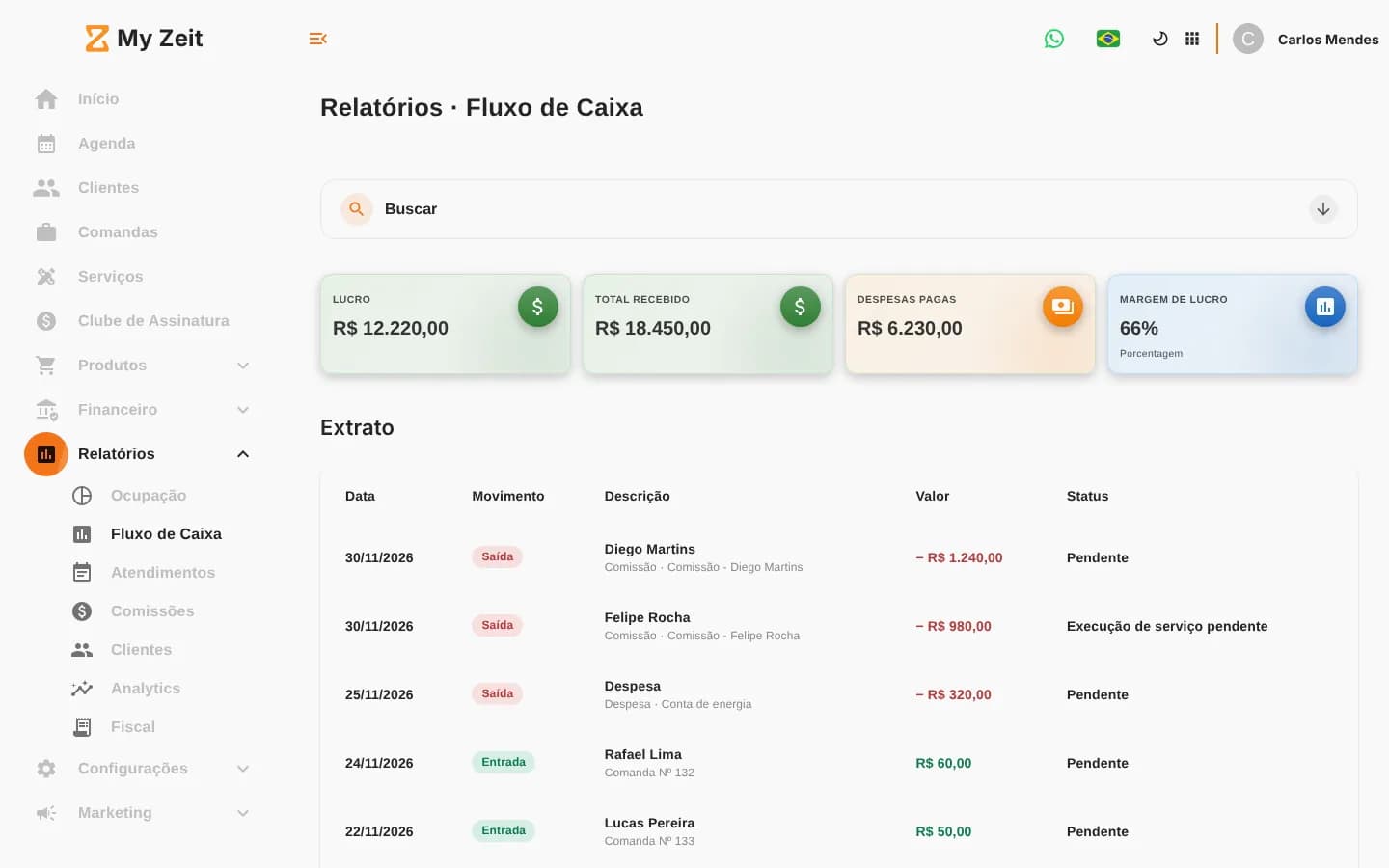
Open it and see what's left
The cash-flow report shows what came in, what went out, the profit and the margin for the period you pick. Underneath, the statement lists every movement, one by one.
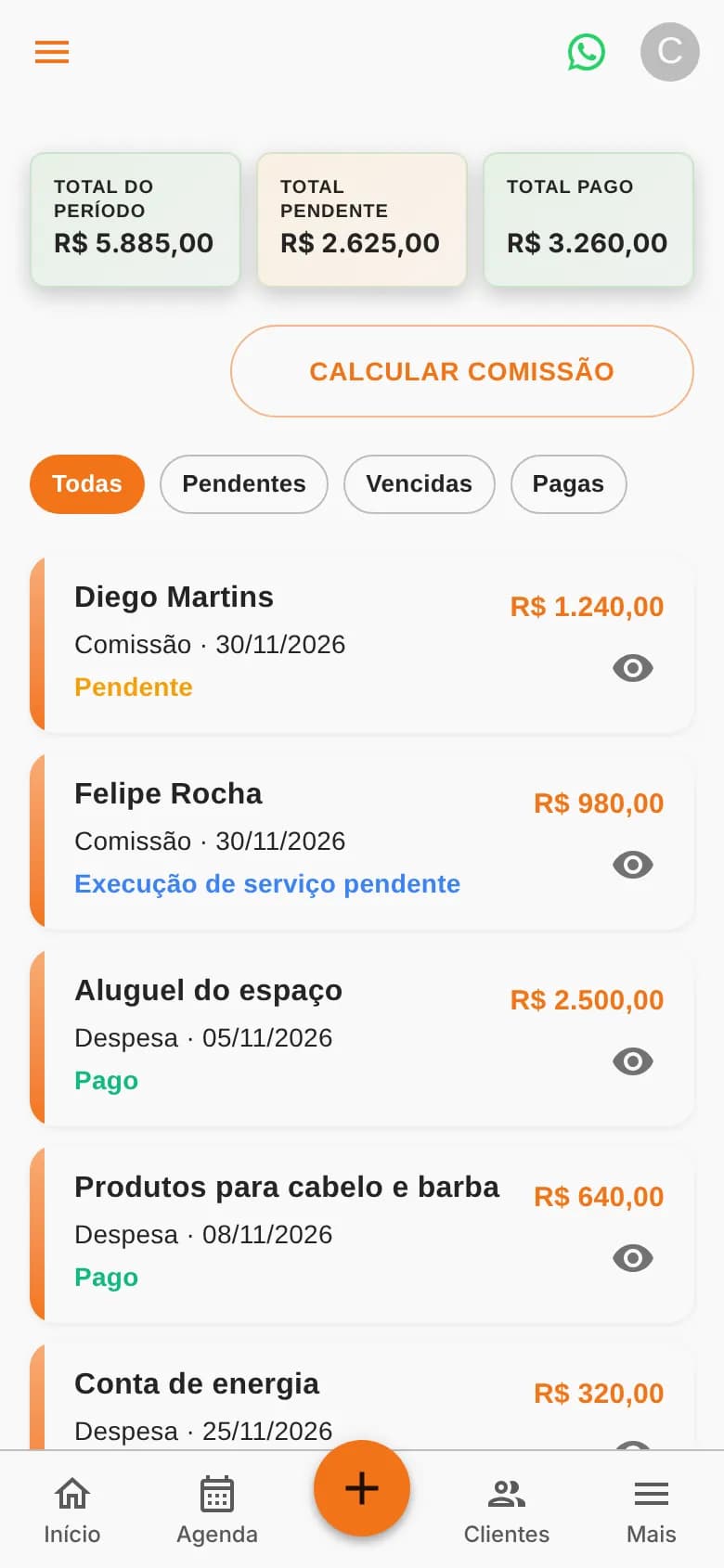
Bills to pay in your pocket
Add a one-off bill, a recurring one such as rent, or a purchase in instalments with every instalment at once. Commissions owed to your barbers also show up here, alongside everything else that needs paying.
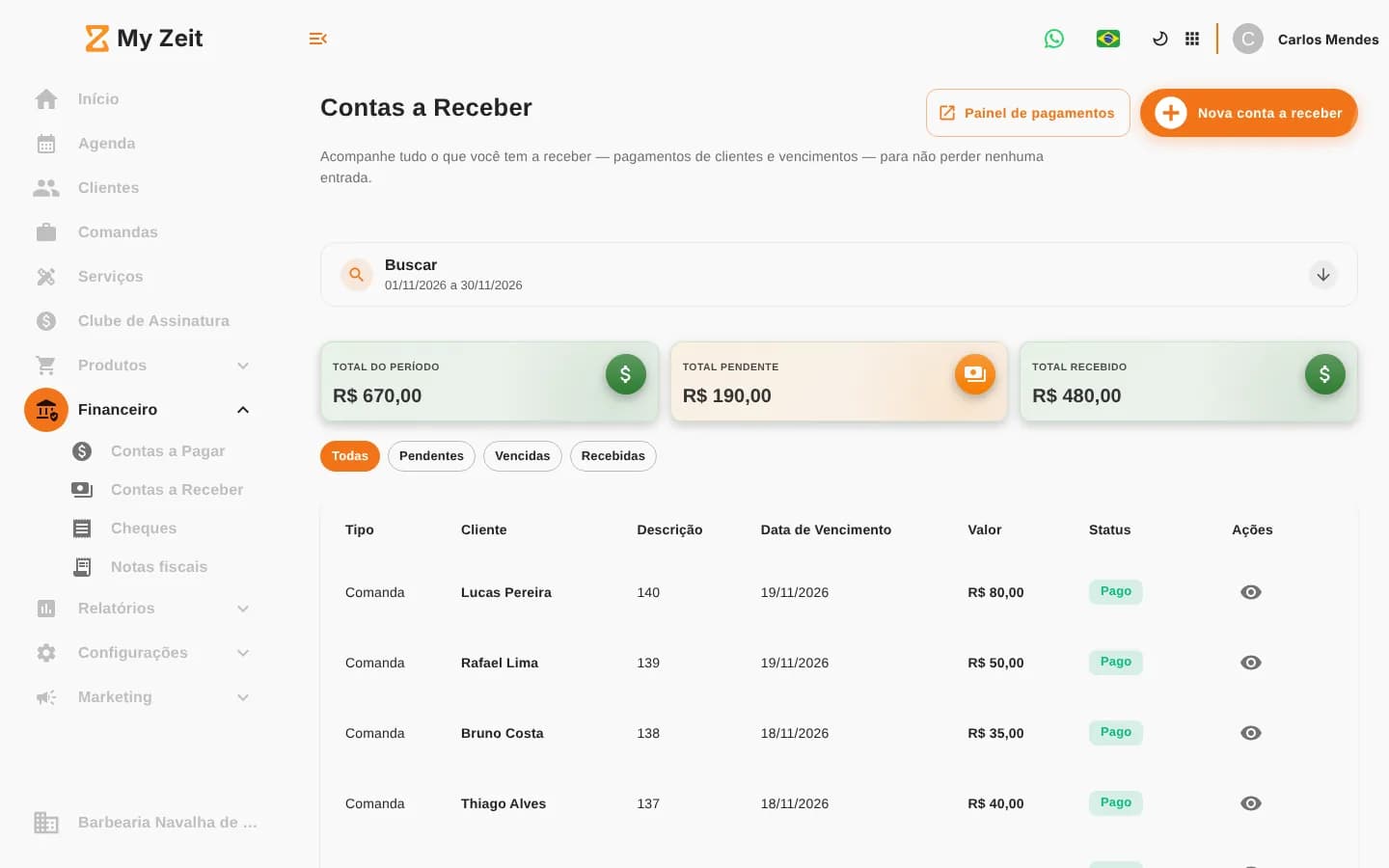
Money to collect without typing
Each order creates its own receivable automatically. You see what has been received and what is still open, and cheques you receive are recorded in the same place.
Frequently asked questions
Do barbers' commissions show up in the finances?
Yes. Commissions to pay appear in bills to pay, next to rent and suppliers, so the cash flow already shows what's left after paying the team.
Do product sales count too?
Yes. Products sold on an order go into the receivable together with the services, and appear as money in on the cash flow.
Do I need to enter every appointment in the finances?
No. When an order is closed, the receivable is created automatically. What you enter by hand are expenses such as rent, bills and purchases.
Can I enter a purchase paid in instalments?
Yes. When you create a bill to pay, you choose whether it is one-off, recurring or in instalments, and the instalments are added with their own dates.
Does it handle cheques?
Yes. Cheques you receive are recorded with their expected deposit date, and you can follow whether each one has been deposited and cleared.
See also
How to work out staff commission without losing an afternoon to sums
Each barber's commission is worked out on every closed order, and you pay one person or everyone in one go.
Stop no-shows by taking a deposit at booking
Collect part of the price when the client books and stop losing appointments to people who never show up.
Stop ending the month with a surprise
Create your account and see, in a single report, what came in, what went out and what's left for you.
Try it free